
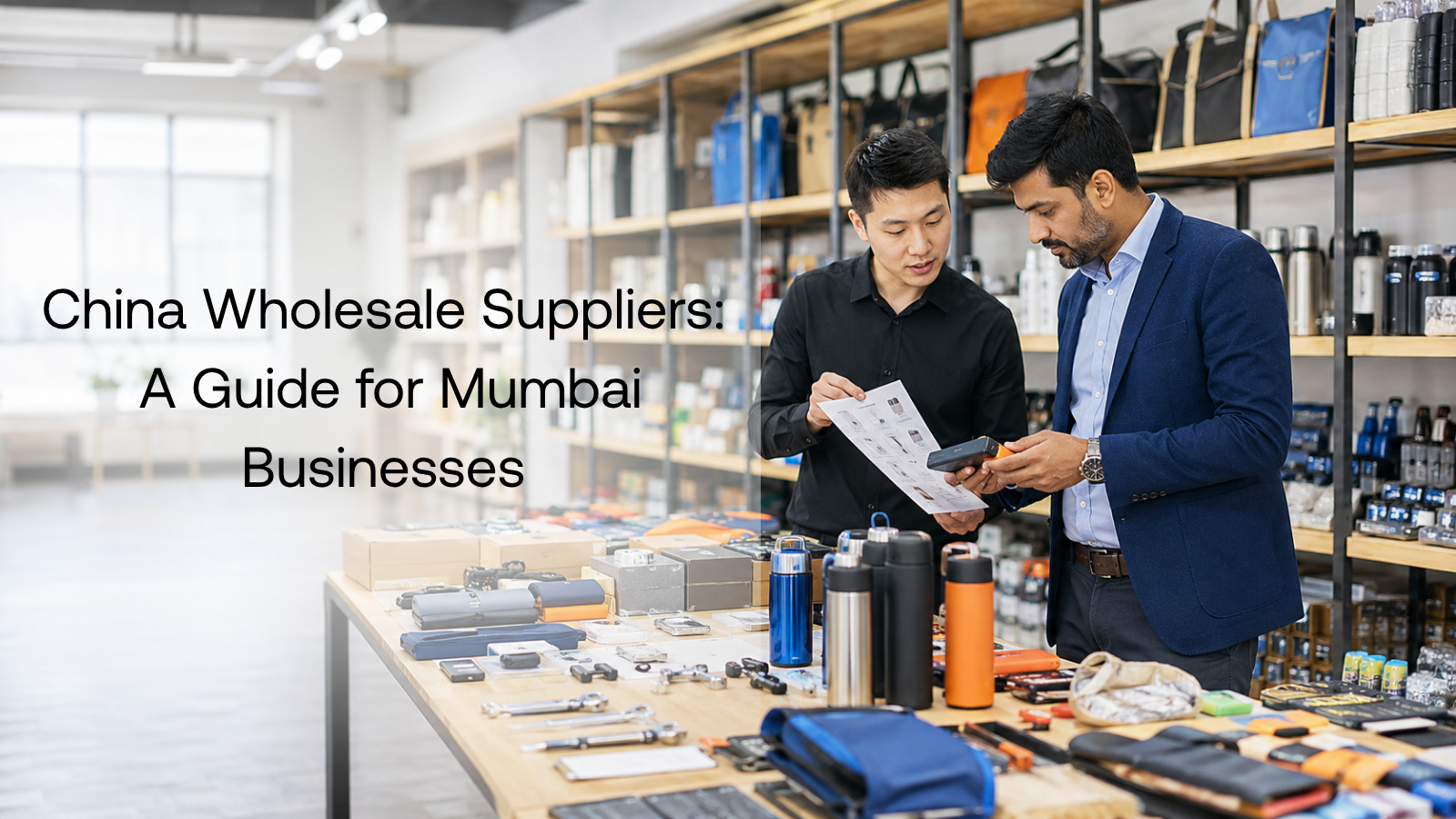
China Wholesale Suppliers: A Guide for Mumbai Businesses
If you are a wholesaler, retailer, distributor, manufacturer, or e-commerce business in Mumbai, sourcing products from China can give you access to a wide range of products and manufacturers.
But successful importing involves more than finding a supplier with a low quotation. You need to choose the right product, compare suitable suppliers, confirm quality, understand Indian import requirements, and calculate the landed cost before placing a bulk order.
For commercial imports into India, an Importer Exporter Code (IEC) is generally required, subject to applicable exemptions. Product-specific requirements can also apply depending on what you are importing.
So, how can a Mumbai business find the right China wholesale suppliers and manage the import process properly?
Let’s look at the process step by step.
How to Find China Wholesale Suppliers
Start by defining exactly what you want to buy.
Before approaching suppliers, prepare the basic product requirements, including:
- Product type and specifications
- Material and dimensions
- Quantity required
- Quality expectations
- Packaging requirements
- Branding or customization needs
- Target purchase price
Once your requirement is clear, you can search for suitable suppliers through B2B marketplaces, direct manufacturers, trade fairs, supplier referrals, and sourcing companies.
Do not compare suppliers on price alone. Ask each shortlisted supplier for comparable information such as MOQ, unit price, sample availability, production time, packaging, payment terms, and shipping terms.
This makes it easier to identify which quotation actually suits your business.
How to Choose a Reliable China Supplier
A supplier should be evaluated based on its ability to consistently provide the product you need, not simply on how attractive its online listing looks.
Before placing a bulk order, look at:
Product Specifications
Confirm the material, size, weight, finish, components, packaging, and other specifications that matter to your customers.
MOQ
Check the minimum order quantity against your budget and expected sales. A lower unit price may not be useful if the supplier requires an unnecessarily large order.
Sample
For products where quality needs to be physically assessed, request a sample before committing to a large quantity.
Compare the sample against the agreed specifications and record any changes before production.
Production Timeline
Confirm when production will start, how long it is expected to take, and whether the timeline depends on sample, artwork, or packaging approval.
Supplier Communication
Clear communication is important when working across countries. A supplier should be able to answer questions about specifications, pricing, production, packaging, and delivery without creating unnecessary confusion.
For larger or customized orders, businesses can also consider supplier verification and pre-shipment inspection.
Read More About: Products Imported from China to India: High-Demand Items Businesses Source
What Should You Check Before Importing From China to India?
Finding a supplier is only one part of the process. Before placing an order, check whether the product can be imported into India and whether any specific compliance requirements apply.
For most commercial imports, an IEC issued by DGFT is required unless an applicable exemption exists.
You should also check the product’s:
- HS classification
- Import policy
- Licensing requirements, if applicable
- Testing or certification requirements
- Quality Control Order requirements, if applicable
- Customs and tax implications
Import rules are product-specific, so avoid relying on assumptions based on another product or previous shipment.
Does Every Product Need BIS Certification?
No.
BIS certification is not mandatory for every product imported into India. However, certain products are covered by compulsory certification requirements or quality control orders.
The applicable requirement depends on the product category and current regulations.
Therefore, check the latest BIS requirements for your specific product before placing the order rather than assuming that BIS certification is either always required or never required.
How Much Does It Cost to Import From China?
The supplier’s quoted price is only the starting point.
Your landed cost can include:
- Product price
- Packaging
- Freight
- Insurance, where applicable
- Customs duties
- Applicable taxes
- Customs clearance and handling
- Local transportation
- Inspection or other service costs, where applicable
For example, a product with a very low factory price may not be the most profitable option if it has high freight costs, large packaging, a high MOQ, or additional import requirements.
Before confirming an order, calculate the expected cost of getting the product from the supplier to your business in Mumbai.
This gives you a better basis for evaluating your selling price and potential margin.
Sea Freight or Air Freight: Which Should You Choose?
The right shipping method depends on your product, shipment size, urgency, and budget.
Sea freight can be suitable for larger shipments where delivery speed is less important and freight efficiency matters.
Air freight can be useful for smaller or time-sensitive shipments where getting the goods to India faster is a priority.
There is no universal answer. Compare the total logistics cost and delivery timeline before selecting the shipping method.
What Documents Are Required for China Imports?
The exact documents depend on the product and shipment, but common import documentation can include:
- Commercial Invoice
- Packing List
- Bill of Lading or Airway Bill
- Bill of Entry
Additional certificates, licenses, test reports, or documents may be required for particular products.
The importer should ensure that the documentation accurately reflects the actual goods, quantities, values, and applicable requirements.
Common Mistakes When Buying Wholesale From China
Many import problems start before the shipment leaves China.
Choosing Only on Price
The cheapest quotation may not offer the best product quality or overall landed cost.
Ordering Without Checking the Product
For products where physical quality matters, skipping samples can create unnecessary risk.
Leaving Specifications Unclear
Terms such as “good quality” are subjective. Use measurable specifications wherever possible.
Ignoring Indian Import Requirements
Check applicable import policy, certification, licensing, and customs requirements before placing the order.
Forgetting Logistics Costs
A factory quotation does not tell you what the product will ultimately cost after freight, duties, taxes, clearance, and delivery.
Ordering Too Much Too Soon
A large first order can tie up capital before you know how the product performs in your market. Where practical, start with an order quantity that matches your business requirements and risk level.
When Should You Work With a China Sourcing Agent?
Direct sourcing can work well when a business already has reliable suppliers, established processes, and experience handling international procurement.
A sourcing agent can be useful when you need help with several parts of the process, such as:
- Finding suitable suppliers
- Comparing quotations
- Communicating product requirements
- Coordinating samples
- Arranging inspections
- Following up on production
- Coordinating shipping
- Supporting customs and delivery
This can be particularly helpful for first-time importers or businesses managing multiple suppliers.
The objective is not simply to find a supplier. It is to make the sourcing process easier to manage while maintaining control over quality, cost, and delivery.
How Surti & Co. Helps Businesses Source From China
Surti & Co supports businesses looking to source and import products from China to India.
Depending on the requirement, its services include product sourcing, supplier identification, sample coordination, quality inspection, production follow-up, shipping, customs support, and delivery coordination.
This can help Mumbai businesses manage the process without having to coordinate every stage independently.
Whether you are sourcing for a retail store, wholesale business, e-commerce brand, manufacturing operation, or distribution business, the right approach depends on your product, quantity, budget, and import requirements.
China to Mumbai Import Process
A typical sourcing process can be organized into these stages:
1. Define your requirement
Specify the product, quantity, quality, packaging, and other requirements.
2. Find suitable suppliers
Research manufacturers, wholesalers, and other relevant suppliers.
3. Compare quotations
Review pricing alongside MOQ, specifications, production time, and commercial terms.
4. Verify and sample
Check supplier information and evaluate a sample where appropriate.
5. Check Indian requirements
Confirm IEC, HS classification, import policy, certification, and other product-specific requirements.
6. Confirm the order
Finalise specifications, quantity, pricing, packaging, payment terms, and production timeline.
7. Arrange shipping and customs
Select the appropriate freight method and complete the required import procedures.
8. Receive the goods in Mumbai
After customs clearance, arrange delivery to your warehouse, shop, office, or other destination.
Following a defined process helps you make sourcing decisions based on information rather than price alone.
Is China Wholesale Sourcing Suitable for Your Business?
China sourcing can be a practical option for businesses that need competitive product options, manufacturing capacity, or access to products that may not be readily available through local suppliers.
However, the opportunity should be evaluated product by product.
Before importing, consider:
- Customer demand
- Competition
- Product quality
- Supplier reliability
- MOQ
- Compliance requirements
- Freight and landed cost
- Expected selling price
- Potential margin
- Working capital
A product is not necessarily a good import opportunity simply because it is inexpensive in China.
The numbers need to work after the product reaches your market.
Start Sourcing From China With the Right Plan
Finding China wholesale suppliers is only the first step.
For a Mumbai business, successful importing comes down to choosing the right product, working with a suitable supplier, checking Indian requirements, and understanding the complete landed cost before placing an order.
If you are planning to source products from China, Surti & Co can help coordinate the sourcing and import process from China to India.
Share your product requirement, expected quantity, and specifications to explore suitable sourcing options for your business.
Frequently Asked Questions
How can I find China wholesale suppliers?
You can find suppliers through B2B marketplaces, manufacturers, trade fairs, referrals, and sourcing companies. Compare suppliers based on product specifications, MOQ, pricing, quality, production capability, and communication rather than price alone.
Can I import wholesale products from China to Mumbai?
Yes. Businesses can import products from China into Mumbai provided the importer, product, documentation, and shipment comply with applicable Indian requirements.
Do I need an IEC to import from China?
An IEC is generally required for importing goods into India, subject to applicable exemptions. It is issued by the Directorate General of Foreign Trade (DGFT).
Do all products imported from China require BIS certification?
No. BIS requirements depend on the specific product. Certain products are covered by compulsory certification or quality control orders, while others are not.
What is the landed cost of an imported product?
Landed cost is the overall cost of getting the product to your destination. It can include the product price, packaging, freight, applicable duties and taxes, clearance, local transportation, and other relevant costs.
Should I order samples before buying wholesale from China?
For many products, ordering a sample is a sensible way to evaluate quality, specifications, finish, packaging, and suitability before placing a larger order.
Is sea freight cheaper than air freight?
It depends on the shipment. Sea freight is often considered for larger shipments, while air freight can be useful when speed is important. Compare the total cost and delivery timeline for your specific shipment.
Can Surti & Co help me find China wholesale suppliers?
Yes. Surti & Co provides China sourcing and import support, including product sourcing, supplier coordination, sampling, inspection, shipping, customs support, and delivery coordination.
Can a sourcing agent help first-time importers?
Yes. A sourcing agent can help coordinate supplier discovery, communication, samples, production follow-up, inspection, shipping, and other parts of the import process.